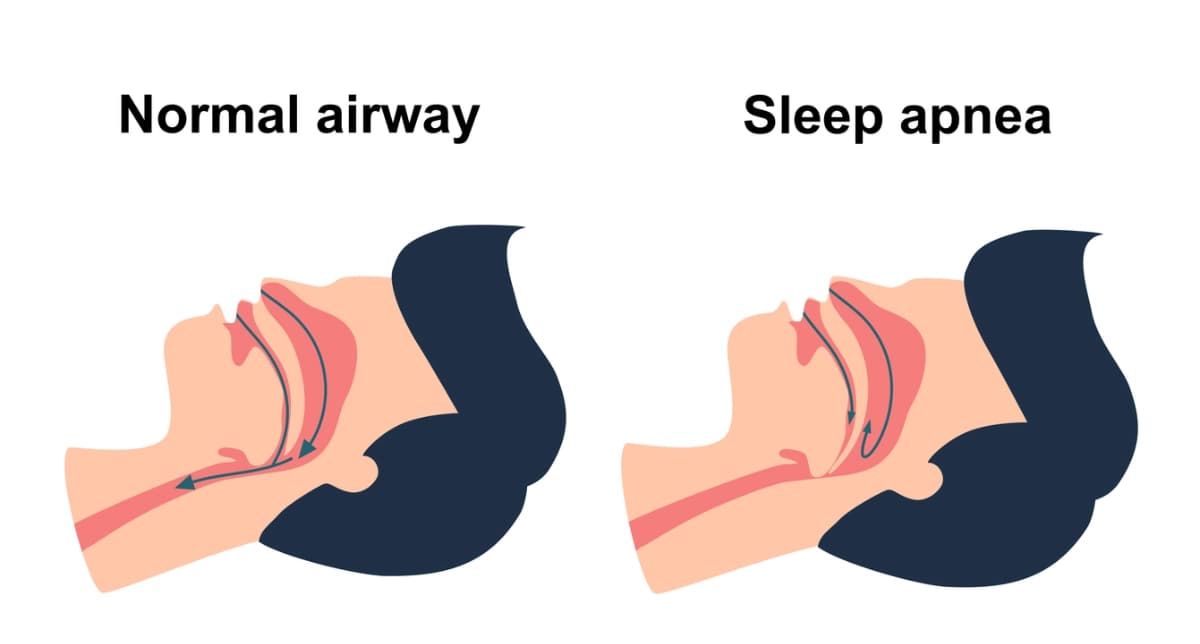
Snoring is a sound produced when tissues in the upper airway vibrate during sleep. Obstructive sleep apnea (OSA) is a sleep-related breathing disorder in which the airway repeatedly narrows or closes enough to reduce or stop airflow. These events can fragment sleep and may lower blood oxygen levels. Loud snoring with witnessed pauses, gasping or choking, unrefreshing sleep or excessive daytime sleepiness raises concern for sleep apnea. A sleep study is needed to confirm or exclude the diagnosis.
Snoring is common, but snoring and sleep apnea are not the same thing.
The distinction matters because obstructive sleep apnea can repeatedly disrupt sleep and is associated with problems such as excessive daytime sleepiness, high blood pressure and increased accident risk.
OSA is also common in India. A 2023 systematic review and meta-analysis of eight sleep-study-based Indian studies involving 11,009 adults estimated the prevalence of obstructive sleep apnea at approximately 11% overall, 13% in men and 5% in women. The researchers estimated that about 104 million working-age Indians may have OSA, including approximately 47 million with moderate-to-severe disease.
If snoring is accompanied by pauses in breathing, gasping or persistent daytime sleepiness, it deserves more attention than simply trying another pillow or nasal strip.
Snoring vs sleep apnea at a glance
|
Feature |
Primary snoring |
Obstructive sleep apnea |
|
What happens |
Upper-airway tissues vibrate while airflow continues |
Airflow repeatedly stops or becomes substantially reduced because the upper airway narrows or collapses |
|
Typical sound |
May be fairly regular, although volume can vary |
Snoring may be interrupted by pauses, gasps, choking or snorting |
|
Breathing events |
Does not meet diagnostic criteria for OSA |
Recurrent apneas, hypopneas or related obstructive respiratory events occur during sleep |
|
Oxygen |
Significant repetitive oxygen drops from OSA are absent |
Oxygen may fall during respiratory events, although not every event necessarily causes a major desaturation |
|
Sleep quality |
May be relatively preserved |
Sleep can be repeatedly fragmented by respiratory events and arousals |
|
Daytime symptoms |
May be absent |
Sleepiness, fatigue, poor concentration or morning headaches may occur |
|
Health significance |
Can disturb a bed partner and still deserves assessment if persistent or changing |
Associated with important health and safety consequences when clinically significant |
|
How doctors distinguish them |
Clinical assessment plus sleep testing when OSA is suspected |
Confirmed with appropriate sleep testing |
|
Treatment |
Depends on the cause and may include weight management, positional measures or an oral appliance |
May include PAP therapy, weight management, positional therapy, an oral appliance or selected surgical treatment |
The important point is that snoring volume alone does not tell you whether someone has sleep apnea.
Does loud snoring mean you have sleep apnea?
No.
Very loud snoring can occur without OSA, while some people with obstructive sleep apnea do not snore particularly loudly.
The more concerning pattern is snoring associated with other features such as:
-
Witnessed pauses in breathing
-
Gasping, choking or snorting during sleep
-
Repeated awakenings
-
Unrefreshing sleep
-
Excessive daytime sleepiness
-
Morning headaches
-
Poor concentration
-
High blood pressure
Snoring should therefore be considered together with the person's symptoms, medical history and risk factors rather than judged by volume alone.
Jindal Chest Clinic's sleep apnea clinic provides assessment for people with snoring and other symptoms of sleep-disordered breathing.
What can a partner notice at night?
A bed partner is often the first person to notice something unusual.
Features that can raise suspicion for obstructive sleep apnea include repeated episodes in which snoring is followed by an apparent pause in breathing and then a gasp, choke or loud snort as breathing resumes.
Some people may also appear restless, change position repeatedly or wake suddenly.
A short phone recording can sometimes help a doctor understand what the partner has observed. However, a video or audio recording cannot diagnose sleep apnea or reliably rule it out.
It is also important not to assume that steady snoring means there is no sleep apnea. Respiratory events can vary during different sleep stages and body positions and may not occur during a few minutes of observation.
If someone has repeatedly witnessed you stop breathing during sleep, arrange a medical assessment rather than trying to count the events yourself.
Can a smartwatch or snoring app detect sleep apnea?
Consumer devices can sometimes provide useful clues, but they are not substitutes for proper diagnostic testing.
A smartwatch may detect changes in oxygen saturation, heart rate or sleep patterns. Snoring apps can record sound and estimate how frequently someone snores.
These findings can encourage someone to seek evaluation, but normal-looking smartwatch data does not reliably exclude OSA.
The American Academy of Sleep Medicine recommends diagnosis using an appropriate polysomnogram or technically adequate home sleep apnea test, depending on the patient's clinical situation.
What if you sleep alone?
People who sleep alone may not know that their breathing stops during the night.
Pay attention to symptoms such as:
-
Waking despite apparently getting enough sleep and still feeling unrefreshed
-
Excessive sleepiness during the day
-
Morning headaches
-
Dry mouth on waking
-
Difficulty concentrating
-
Repeated night-time urination
-
Waking with gasping or choking
-
Unexplained fatigue
None of these symptoms proves OSA, but a combination of them can justify evaluation.
If you are becoming sleepy while driving or operating machinery, do not rely on caffeine or willpower to compensate. Daytime sleepiness severe enough to affect driving requires prompt medical attention.
For more information about how disturbed sleep affects breathing and respiratory health, read our guide to sleep quality and lung health.
Who is at higher risk of sleep apnea?
The likelihood of obstructive sleep apnea increases with several factors, including:
-
Excess body weight
-
Increasing age
-
Male sex
-
Larger neck circumference
-
High blood pressure
-
Certain jaw or upper-airway anatomical features
-
Alcohol or sedative use
-
Family history
-
Nasal obstruction in some patients
Women can also develop significant OSA and may not always present with the stereotypical picture of very loud snoring.
One commonly used screening tool is the STOP-Bang questionnaire.
STOP-Bang asks about:
S: Snoring T: Tiredness O: Observed apnea P: High blood pressure B: Body mass index A: Age N: Neck circumference G: Gender
A higher score increases the probability of clinically important OSA.
However, STOP-Bang is a screening questionnaire, not a diagnostic test. A score cannot tell you on its own whether you actually have sleep apnea.
Indian INOSA guidelines also recommend comprehensive sleep evaluation in people with features such as snoring, daytime sleepiness, obesity, hypertension or a history of motor-vehicle accidents.
When is snoring more likely to be simple snoring?
Primary snoring becomes more likely when testing shows that the person does not have the recurrent obstructive respiratory events required for an OSA diagnosis.
Someone may snore more when:
-
Sleeping on their back
-
Experiencing nasal congestion
-
Drinking alcohol close to bedtime
-
Gaining weight
However, symptoms alone cannot confidently separate primary snoring from OSA.
A person who previously had primary snoring can also develop OSA later if their risk factors change, particularly after significant weight gain or with increasing age.
Persistent or changing snoring should therefore be reassessed if new symptoms such as daytime sleepiness, witnessed pauses or hypertension appear.
What can help with simple snoring?
Depending on the cause, measures that may help include:
-
Losing excess weight where appropriate
-
Sleeping on your side if snoring is position-dependent
-
Avoiding alcohol close to bedtime
-
Treating persistent nasal obstruction or allergy when present
-
Stopping smoking
-
Considering a professionally fitted oral appliance in suitable adults
Treating nasal obstruction may make breathing and snoring better, but it should not be assumed to cure obstructive sleep apnea.
If OSA is suspected, the diagnosis should be clarified before treating the problem as simple snoring.
How do doctors tell snoring and sleep apnea apart?
Sleep apnea is diagnosed using sleep testing together with a proper clinical assessment.
The reference test is an overnight polysomnogram, which can record parameters including:
-
Brain activity and sleep stages
-
Airflow
-
Chest and abdominal breathing movements
-
Blood oxygen saturation
-
Heart rate
-
Body position
-
Leg movements
You can read more about how the test is performed on our sleep study or polysomnography page.
What is the AHI?
One of the main measurements from a sleep study is the apnea-hypopnea index (AHI).
It represents the average number of apneas and hypopneas occurring per hour of sleep.
In adults, severity is commonly described approximately as:
|
AHI |
Common classification |
|
Below 5/hour |
Does not meet the usual AHI threshold for OSA |
|
5 to <15/hour |
Mild range |
|
15 to <30/hour |
Moderate range |
|
30/hour or more |
Severe range |
The number should not be interpreted in isolation.
Under Indian INOSA criteria, OSA can be diagnosed when there are at least five obstructive respiratory events per hour together with relevant symptoms or comorbidities, or at least 15 events per hour even without those features.
The clinical significance of the study also depends on symptoms, oxygen changes, associated diseases and other sleep-study findings.
Is a hospital sleep study always necessary?
Not always.
For selected adults who have a high likelihood of uncomplicated moderate-to-severe OSA, a technically adequate home sleep apnea test may be appropriate.
However, a laboratory polysomnogram provides considerably more information and remains the standard diagnostic test.
An in-lab study is generally preferred when other significant medical or sleep conditions could complicate the diagnosis.
A negative or inconclusive home test also does not necessarily exclude OSA. If clinical suspicion remains high, a full polysomnogram may be required.
At Jindal Chest Clinic, full polysomnography and airway-pressure titration studies are available for patients when clinically indicated.
What happens if the sleep study confirms sleep apnea?
Treatment depends on the severity of the disease, symptoms, anatomy, associated medical conditions and patient preferences.
Positive airway pressure therapy
Positive airway pressure, or PAP, keeps the upper airway open during sleep by delivering air through a mask.
Common forms include:
-
CPAP, which provides continuous pressure
-
APAP, which adjusts pressure automatically within a prescribed range
-
BiPAP or bilevel PAP, which uses different inspiratory and expiratory pressures and is appropriate in selected situations
PAP is one of the most effective treatments for obstructive sleep apnea and is particularly important for many people with clinically significant OSA.
Current AASM guidance recommends PAP treatment particularly for adults with OSA and excessive sleepiness, and also supports its use in patients with impaired sleep-related quality of life or associated hypertension.
Oral appliances
A custom, titratable mandibular advancement device may be an alternative for selected adults.
Oral appliance therapy can be considered when a patient cannot tolerate CPAP or prefers an alternative after discussing the benefits and limitations with a sleep physician.
The appliance should ideally be fitted and monitored by an appropriately trained dentist in coordination with the treating sleep physician.
Weight management
Weight reduction can significantly improve OSA in people who are overweight or obese, although it does not replace other treatment when clinically significant OSA remains present.
Positional therapy
Some patients have considerably more respiratory events while sleeping on their back.
Positional therapy can be useful when sleep testing confirms a strong positional component.
Surgery
Surgery may be considered in selected people with an identifiable anatomical obstruction or when other appropriate treatments are unsuitable or have failed.
Treatment therefore needs to be individualised rather than based only on the AHI number.
If you have already been diagnosed or want to discuss treatment options, you can consult a sleep apnea doctor in Chandigarh.
Should you buy a CPAP machine without a sleep study?
Self-treating suspected sleep apnea with a CPAP machine is not a good substitute for proper evaluation.
The first question is whether OSA is actually present. The next questions are how severe it is, whether another sleep-related breathing disorder is present and which treatment is appropriate.
Some people can appropriately start auto-adjusting PAP at home after diagnosis and medical evaluation, so an overnight laboratory pressure-titration study is not necessary for every patient.
But the treatment plan should still follow a proper sleep assessment rather than simply purchasing a machine based on snoring.
Does everyone who snores have sleep apnea?
No.
Many people who snore do not have obstructive sleep apnea.
Snoring becomes more concerning when it occurs with witnessed breathing pauses, gasping, choking, excessive daytime sleepiness, unrefreshing sleep or other risk factors.
A sleep evaluation can determine whether the snoring represents primary snoring or an underlying sleep-related breathing disorder.
Can you have sleep apnea without snoring?
Yes.
Snoring is common in OSA, but its absence does not completely rule the condition out.
Someone with unexplained excessive daytime sleepiness, recurrent gasping or witnessed breathing interruptions may still require evaluation even if they are not known to snore loudly.
Central sleep apnea, which is different from obstructive sleep apnea, may also occur without the typical pattern of obstructive snoring.
Can simple snoring turn into sleep apnea?
A person who currently has primary snoring can later develop obstructive sleep apnea.
That does not mean every snorer will progress to OSA.
Risk can change over time because of ageing, weight gain, changes in upper-airway anatomy, menopause, alcohol or sedative exposure and other health factors.
If snoring becomes more severe or new symptoms develop, an old normal sleep study should not automatically be assumed to reflect the current situation.
Kharate aur sleep apnea mein kya fark hai?
Kharate sote waqt gale ke tissues ke vibration se aane wali awaaz hai.
Obstructive sleep apnea mein sote waqt airway baar-baar itna narrow ya block ho jata hai ki hawa ka flow kam ho jata hai ya kuch samay ke liye ruk jata hai. Isse neend toot sakti hai aur oxygen level bhi gir sakta hai.
Agar kharaton ke saath saans rukti hui dikhe, gasping ya choking ho, ya poori raat sone ke baad bhi din mein bahut neend aaye, to sleep specialist se evaluation karwayein.
Sleep apnea ko sirf kharaton ki awaaz se diagnose nahi kiya ja sakta. Confirmation ke liye appropriate sleep testing ki zarurat hoti hai.
Is snoring in children normal?
Occasional snoring during a cold can occur in children.
Habitual snoring, particularly when accompanied by mouth breathing, restless sleep, witnessed breathing pauses, behavioural changes or concentration problems, deserves medical assessment.
Enlarged tonsils and adenoids are common contributors to obstructive sleep apnea in children, but children require a separate paediatric evaluation because their diagnostic criteria and treatment are not identical to those used in adults.
Do I need a sleep study just because I snore?
Not every person who snores automatically needs an overnight laboratory polysomnogram.
The decision depends on symptoms, risk factors, medical history and clinical examination.
Sleep testing becomes particularly important when snoring is accompanied by:
-
Witnessed breathing pauses
-
Gasping or choking
-
Excessive daytime sleepiness
-
Unrefreshing sleep
-
Resistant or difficult-to-control hypertension
-
Other features that raise clinical suspicion for OSA
If you are uncertain whether your symptoms need testing, a sleep consultation can help determine the appropriate next step.
Listen to more than the snoring
The important difference between primary snoring and obstructive sleep apnea is not simply how loud someone snores.
Doctors look at whether abnormal breathing events occur during sleep, how frequently they occur, whether they disrupt sleep or oxygen levels and whether the person has related symptoms or health conditions.
Witnessed pauses, gasping or significant daytime sleepiness should not be dismissed as ordinary snoring.
Jindal Chest Clinics in Sector 20D, Chandigarh, provides evaluation of sleep-related breathing disorders and overnight sleep studies when clinically indicated.
Book an appointment or call 0172-4911000 or +91 9779030507.
