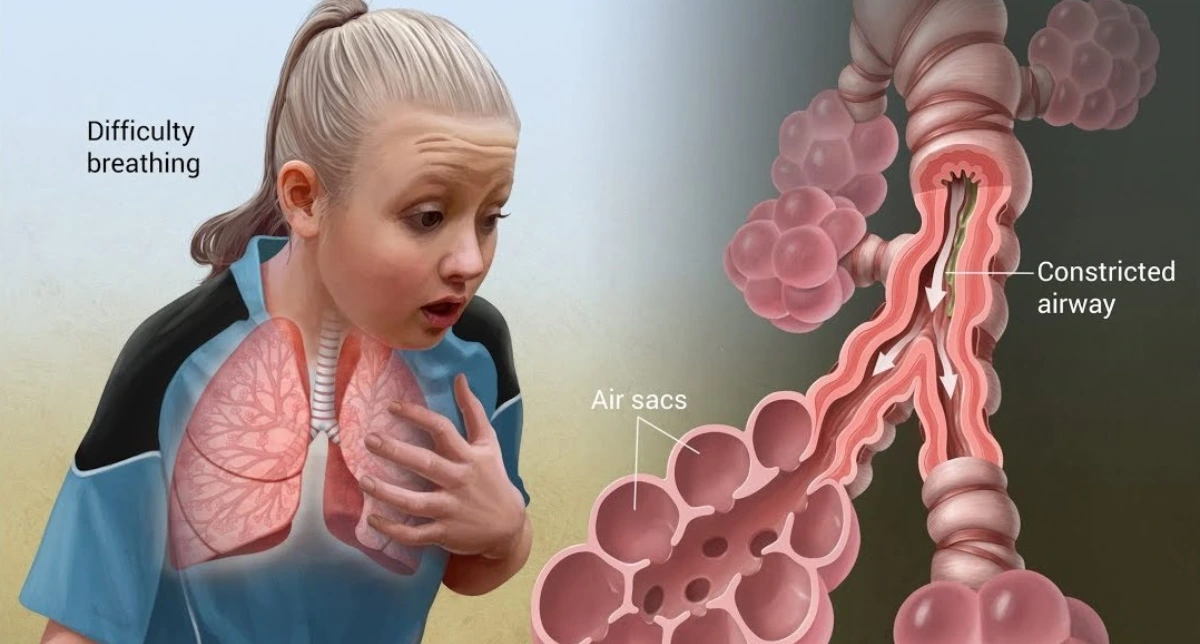
Wheezing is a high-pitched, whistling sound that can occur when air moves through narrowed or partially obstructed airways. Asthma and COPD are common causes of recurrent wheezing in adults. Other possible causes include respiratory infections, allergic reactions, certain medications, heart failure, and, in sudden-onset cases, an inhaled foreign object.
New, persistent, or unexplained wheezing should be medically evaluated, particularly when it is associated with breathlessness, chest tightness, coughing up blood, or other concerning symptoms.
Wheezing is a symptom rather than a diagnosis. It is often more noticeable while breathing out, although it can sometimes occur during breathing in as well. Identifying the underlying cause is important because treatment can vary significantly depending on what is narrowing or affecting the airways.
What Causes Wheezing?
Wheezing can result from several respiratory and, in some cases, cardiovascular conditions. Common causes include:
-
Asthma: Airway inflammation and narrowing can cause recurrent wheezing, coughing, chest tightness, and breathlessness.
-
COPD: Chronic airflow limitation can cause wheezing, cough, sputum production, and shortness of breath.
-
Respiratory infections: Viral infections, bronchitis, and pneumonia can sometimes cause temporary wheezing.
-
Allergic reactions: Severe allergic reactions, including anaphylaxis, can cause sudden wheezing and breathing difficulty.
-
Bronchiectasis: Damaged and widened airways can lead to chronic cough, mucus production, recurrent infections, and wheezing.
-
Heart failure: Fluid buildup associated with heart failure can sometimes cause wheezing along with breathlessness.
-
Certain medications: Some medicines, including beta-blockers, aspirin, and other NSAIDs, can trigger breathing symptoms or bronchospasm in susceptible individuals.
-
Inhaled foreign object: A sudden onset of wheezing, particularly after choking, may indicate that something has entered the airway.
-
Airway narrowing caused by a mass or other structural problem: Persistent or localized wheezing may occasionally occur when part of an airway is narrowed.
The cause cannot always be identified from the sound of wheezing alone. Your symptoms, medical history, physical examination, and appropriate tests help determine the underlying reason.
Sudden vs. Gradual Wheezing: Why the Pattern Matters
The way wheezing begins can provide useful clues about its possible cause.
Sudden-onset wheezing may occur with an allergic reaction, asthma flare, respiratory infection, or inhalation of a foreign object. Wheezing that starts suddenly after choking or while eating requires prompt medical assessment.
Gradually developing or persistent wheezing may be associated with conditions such as asthma, COPD, chronic airway inflammation, or other causes of airway narrowing.
If wheezing is persistent, repeatedly occurs in the same area of the chest, or is associated with other unexplained symptoms, further evaluation may be needed.
Wheeze, Stridor and Crackles: What Is the Difference?
Different breathing sounds can suggest problems affecting different parts of the respiratory system.
|
Sound |
What It May Suggest |
|
Wheeze |
Narrowing of airways; may occur with asthma, COPD, infections, allergic reactions, or other airway conditions |
|
Stridor |
Narrowing or obstruction of the upper airway, such as around the voice box or windpipe |
|
Crackles |
May occur when there is fluid, inflammation, fibrosis, or other changes affecting the lungs |
Stridor is often heard as a harsh, high-pitched sound, particularly during breathing in. A new or severe stridor can indicate a significant upper-airway problem and requires urgent medical assessment.
When Should You Seek Urgent Medical Care?
Seek emergency medical care if wheezing occurs with:
-
Severe difficulty breathing or rapidly worsening breathlessness
-
Difficulty speaking because of shortness of breath
-
Swelling of the lips, tongue, mouth, or throat, particularly with hives or other signs of a severe allergic reaction
-
Blue or grey lips, face, or fingertips
-
A severe or persistent high-pitched sound while breathing in, particularly if breathing is difficult
-
Sudden breathing difficulty after choking or suspected inhalation of a foreign object
-
Fainting, confusion, or reduced alertness
-
Severe or persistent chest pain
These symptoms can indicate a serious breathing or airway problem and should not be managed at home.
When Should You See a Doctor for Wheezing?
Arrange a medical evaluation if you have:
-
New or unexplained wheezing
-
Wheezing that keeps returning
-
Wheezing that does not improve after a respiratory infection has resolved
-
Wheezing accompanied by persistent cough, breathlessness, or chest tightness
-
A noticeable change in your usual breathing symptoms
-
Wheezing that develops after starting a new medication
People with an existing diagnosis of asthma or COPD should also seek medical advice if their usual treatment is not controlling their symptoms or their breathing is getting worse.
How Is Wheezing Evaluated?
The evaluation of wheezing usually begins with a medical history and physical examination. Your doctor may ask about:
-
When the wheezing started
-
Whether it began suddenly or gradually
-
Previous episodes of wheezing
-
Asthma, COPD, allergies, or other respiratory conditions
-
Smoking history and exposure to smoke, dust, or chemicals
-
Recent respiratory infections
-
Current medications
-
Symptoms such as cough, sputum production, fever, chest pain, or breathlessness
Depending on the suspected cause, further tests may include:
-
Pulse oximetry to assess oxygen saturation
-
Spirometry to assess airflow limitation
-
Peak flow measurement in selected situations
-
FeNO testing when eosinophilic airway inflammation or asthma is being considered
-
Chest imaging, such as a chest X-ray, when clinically indicated
-
More detailed imaging or bronchoscopy when there is concern about airway obstruction, a foreign body, or another structural abnormality
A broader pulmonary function test may also be recommended when additional information about lung function is needed.
How Is Wheezing Treated?
Treatment depends on the underlying cause.
For example:
-
Asthma-related wheezing may be treated with inhaled medicines that open the airways and medicines that reduce airway inflammation.
-
COPD-related wheezing may require bronchodilator treatment and other management depending on the severity and type of COPD.
-
Wheezing caused by an allergic reaction may require urgent treatment, particularly if anaphylaxis is suspected.
-
Respiratory infections may require treatment based on the specific cause.
-
Heart-failure-related wheezing requires treatment of the underlying heart condition rather than assuming that inhalers alone will resolve the problem.
-
A foreign object in the airway may require urgent removal.
Because wheezing has many possible causes, treatment should be directed at the underlying condition rather than the sound itself.
Can You Treat Wheezing at Home?
If you have a previously diagnosed respiratory condition and your doctor has given you a written action plan or specific instructions for managing worsening symptoms, follow that plan.
However, new, unexplained, or significantly changed wheezing should not be repeatedly self-treated without medical advice. Using an old inhaler or medication prescribed for a previous episode may not be appropriate if the cause of the new symptoms is different.
Do not ignore wheezing that is becoming more frequent, more severe, or associated with increasing breathlessness.
Getting Evaluated at Jindal Chest Clinics
Jindal Chest Clinics in Chandigarh provides respiratory evaluation and diagnostic testing for people experiencing wheezing, persistent cough, breathlessness, and other respiratory symptoms.
Depending on the suspected cause, a pulmonologist may recommend spirometry, FeNO testing, broader pulmonary function testing, imaging, or bronchoscopy when clinically appropriate.
If your wheezing is new, recurrent, persistent, or accompanied by breathlessness, chest tightness, or other concerning symptoms, a proper evaluation can help identify the cause and determine the appropriate treatment.
Frequently Asked Questions
Is wheezing always a sign of asthma?
No. Asthma is a common cause of recurrent wheezing, but wheezing can also occur with COPD, respiratory infections, allergic reactions, bronchiectasis, heart failure, medication-related reactions, or airway obstruction.
When is wheezing a medical emergency?
Wheezing requires emergency medical attention when it is accompanied by severe difficulty breathing, swelling of the lips or throat, signs of a severe allergic reaction, blue or grey skin or lips, fainting, confusion, severe chest pain, or sudden breathing difficulty after choking.
Can wheezing happen without asthma or COPD?
Yes. Wheezing can occur with respiratory infections, allergic reactions, bronchiectasis, heart failure, certain medication reactions, or an obstruction affecting the airway.
Which tests are used to evaluate wheezing?
The tests depend on the suspected cause. Spirometry may be used to assess airflow limitation, while FeNO may be useful in selected patients when asthma or eosinophilic airway inflammation is suspected. Chest imaging, blood tests, allergy testing, or bronchoscopy may also be considered when clinically appropriate.
Can medication cause wheezing?
Yes. Some medications can trigger bronchospasm or breathing symptoms in susceptible individuals. Examples include beta-blockers and aspirin or other NSAIDs in certain people.
ACE inhibitors are more commonly associated with a persistent dry cough rather than wheezing, although any new breathing symptoms after starting a medication should be discussed with a doctor.
Do not stop prescribed medication without medical advice.
Should I use my old inhaler if I start wheezing again?
Only use medication according to the treatment plan or instructions provided by your doctor. If you have asthma or another diagnosed respiratory condition and have been given a specific action plan, follow that plan.
If the wheezing is new, significantly different from your usual symptoms, or is not improving as expected, seek medical advice rather than relying on medication prescribed for a previous episode.
Can wheezing go away on its own?
It depends on the cause. Wheezing associated with a temporary respiratory infection or mild irritant exposure may improve as the underlying problem resolves. However, recurrent, persistent, or unexplained wheezing should be evaluated to identify and treat the underlying cause.
