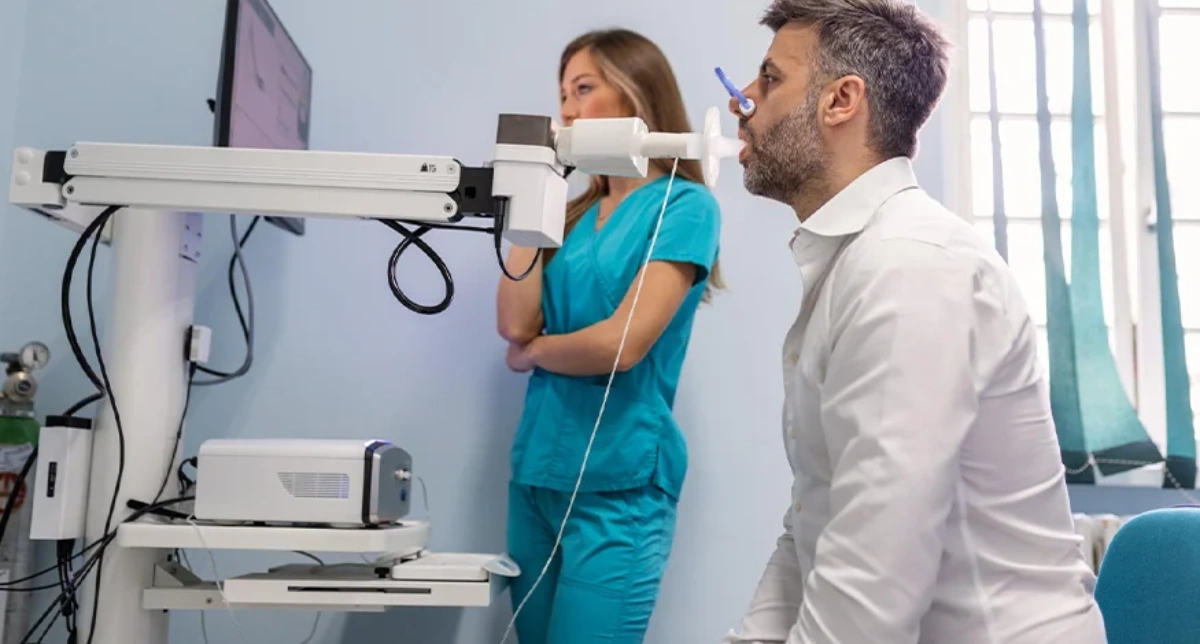
A pulmonary function test (PFT) measures how well your lungs move air, how much air your lungs can hold, and how efficiently gases move between your lungs and blood. A PFT commonly includes spirometry and may include additional tests such as lung volume measurement and DLCO, depending on what your doctor is investigating.
If your doctor has recommended a pulmonary function test, it may be because you have symptoms such as cough, wheezing, or breathlessness, a known lung condition that needs monitoring, or you need an assessment before certain types of surgery. Most pulmonary function tests are non-invasive and generally painless. Depending on which tests are performed, the appointment may take approximately 15 to 60 minutes.
What Is a Pulmonary Function Test?
A pulmonary function test, or PFT, is not a single test but a group of breathing tests used to evaluate different aspects of lung function.
A comprehensive assessment may evaluate:
-
Airflow: How easily and quickly air moves through the airways
-
Lung volumes: How much air the lungs can hold
-
Gas transfer: How effectively gases move from the lungs into the bloodstream
According to ERS/ATS technical standards, routine lung function assessment may include spirometry, lung volume measurement, and a gas diffusion study. However, not every patient needs every component. The tests selected depend on the symptoms, medical history, and clinical question being investigated.
What Does Each Part of a PFT Measure?
|
Test |
What It Measures |
Why It May Be Used |
|
Spirometry |
How much air you can forcefully exhale and how quickly |
Commonly used to assess airflow obstruction, including in asthma and COPD |
|
Lung volumes |
The amount of air the lungs hold at different points during breathing |
Helps assess restrictive patterns and overall lung capacity |
|
DLCO |
How efficiently gases move from the lungs into the bloodstream |
Can provide information about gas transfer and may be useful when lung tissue disease is suspected |
|
FeNO |
The level of nitric oxide in exhaled breath |
Can help assess certain types of airway inflammation, particularly in asthma |
|
FOT |
Respiratory system resistance using gentle pressure oscillations during normal breathing |
May be useful when conventional forceful breathing tests are difficult to perform |
You can learn more about the individual tests through Jindal Chest's spirometry, DLCO, FOT, and FeNO testing pages.
Why Might a Doctor Order a Pulmonary Function Test?
A doctor or pulmonologist may recommend a PFT for several reasons, including:
-
Investigating unexplained cough, wheezing, or breathlessness
-
Evaluating or monitoring conditions such as asthma, COPD, or interstitial lung disease
-
Assessing lung function before certain surgeries
-
Evaluating the effects of long-term smoking or occupational exposure
-
Monitoring how a respiratory condition responds to treatment
-
Investigating abnormal findings from other tests
A PFT does not usually provide a diagnosis by itself. Results are interpreted together with your symptoms, medical history, physical examination, and, when appropriate, imaging or other investigations.
For patients experiencing persistent respiratory symptoms, a consultation with a pulmonologist in Chandigarh may help determine whether pulmonary function testing is appropriate.
How to Prepare for a Pulmonary Function Test
Preparation instructions can vary depending on the type of test and the clinic performing it. Your doctor or testing centre should provide specific instructions before the appointment.
General preparation may include:
-
Avoiding a heavy meal shortly before testing
-
Avoiding strenuous exercise before the test
-
Avoiding alcohol before testing
-
Not smoking on the day of the test
-
Wearing loose, comfortable clothing that does not restrict breathing
-
Bringing a list of your current medications
-
Following your doctor's instructions regarding inhalers or other respiratory medicines
If your test includes bronchodilator or reversibility testing, you may be asked to temporarily withhold certain inhalers. Do not stop any prescribed medication unless your doctor or testing centre specifically instructs you to do so.
If you have recently had surgery or have a significant heart or respiratory condition, tell the testing team before the procedure.
What Happens During a Pulmonary Function Test?
The exact procedure depends on which components of the PFT have been ordered.
Spirometry
For spirometry, you will usually breathe through a mouthpiece connected to a spirometer while wearing a nose clip.
You may be asked to:
-
Take a deep breath in.
-
Seal your lips around the mouthpiece.
-
Exhale as hard and as completely as possible.
-
Repeat the manoeuvre several times to obtain consistent measurements.
The test requires effort, so you may feel temporarily tired or light-headed after repeated forceful breaths.
Lung Volume Testing
Lung volumes may be measured using a body plethysmograph, a clear booth in which you sit and breathe through a mouthpiece while changes in pressure are measured.
This helps determine how much air your lungs can hold and can provide information that spirometry alone cannot provide.
DLCO Testing
During a DLCO test, you breathe in a very small amount of a tracer gas mixture and briefly hold your breath before exhaling.
The test helps assess how effectively gases move from the lungs into the bloodstream.
How Long Does a PFT Take?
The duration depends on the tests included.
A single spirometry test may take around 15 to 30 minutes, while a more complete set of pulmonary function tests involving lung volumes and DLCO may take up to approximately 60 minutes.
Understanding Your Pulmonary Function Test Results
Spirometry reports commonly include measurements such as:
-
FEV1: The amount of air you can forcefully exhale during the first second
-
FVC: The total amount of air you can forcefully exhale after taking a full breath
-
FEV1/FVC ratio: The relationship between these two measurements
Your doctor may assess the overall pattern of the results rather than looking at a single number.
|
Pattern |
What It May Suggest |
|
Reduced FEV1/FVC ratio |
An obstructive ventilatory pattern, which can occur in conditions such as asthma or COPD |
|
Reduced FVC with reduced total lung capacity |
A restrictive ventilatory pattern |
|
Reduced FEV1/FVC and reduced total lung capacity |
A possible mixed obstructive and restrictive pattern |
|
No significant abnormality detected |
No significant obstruction or restriction identified by the measurements performed |
These patterns are not diagnosed by themselves. Your doctor interprets PFT results alongside symptoms, medical history, physical examination, and other test results.
A normal PFT also does not necessarily exclude every possible lung or respiratory condition.
Are Pulmonary Function Tests Safe?
Pulmonary function tests are generally safe and non-invasive.
Because some components require forceful breathing, temporary coughing, breathlessness, dizziness, or tiredness can occasionally occur during testing.
Your doctor may modify or postpone testing in certain situations, such as some recent eye, chest, or abdominal surgeries or certain unstable medical conditions.
Tell the testing team about recent surgery, significant heart problems, severe respiratory symptoms, or other relevant medical conditions before the test.
Getting a Pulmonary Function Test at Jindal Chest Clinics
Jindal Chest Clinics in Chandigarh offers pulmonary function testing services, including spirometry, DLCO, FOT, and FeNO.
The specific tests recommended depend on your symptoms, medical history, physical examination, and what your doctor is investigating.
If you have persistent cough, wheezing, breathlessness, or a known respiratory condition and have been advised to undergo lung function testing, you can learn more about Jindal Chest's pulmonary function testing services.
Frequently Asked Questions
How long does a pulmonary function test take?
A single spirometry test may take around 15 to 30 minutes. A more complete set of pulmonary function tests, including lung volume measurements and DLCO, may take up to approximately 60 minutes, depending on the tests required.
Is a pulmonary function test painful?
No. PFTs are non-invasive and generally painless. However, repeated forceful breathing during some tests can feel tiring and may occasionally cause temporary coughing or light-headedness.
Do I need to stop my inhaler before a pulmonary function test?
It depends on the type of test and what your doctor is trying to assess. You may be asked to temporarily withhold certain inhalers before bronchodilator testing, but you should only do this when specifically instructed by your doctor or testing centre.
What can a pulmonary function test detect?
PFTs can help assess abnormalities involving airflow, lung volumes, and gas transfer. They may be useful when evaluating conditions such as asthma, COPD, interstitial lung disease, and other respiratory disorders. A complete diagnosis usually requires the results to be considered alongside symptoms, medical history, examination, and other investigations.
Can children have a pulmonary function test?
Yes. Some children can perform pulmonary function tests successfully, although very young children may have difficulty following the breathing instructions required for certain tests. The appropriate testing method depends on the child's age and ability to cooperate.
Is a pulmonary function test the same as spirometry?
No. Spirometry is one of the most common components of a pulmonary function test. A complete PFT may also include lung volume measurements, DLCO, and other assessments depending on what is being investigated.
What is the difference between a PFT and a lung function test?
The terms are often used interchangeably. A pulmonary function test is a group of tests designed to evaluate how well the lungs work, including airflow, lung volumes, and gas transfer.
What should I bring to a pulmonary function test?
Bring your current medication list, previous relevant medical reports, and any instructions provided by your doctor or testing centre. If you use inhalers, bring them with you unless your doctor has given you different instructions.
Can a PFT diagnose asthma or COPD?
PFTs can provide important evidence when evaluating asthma and COPD, but the results should be interpreted alongside symptoms, medical history, physical examination, and other relevant findings. A PFT result alone does not establish every diagnosis.
Medical Disclaimer
This article is intended for general educational purposes and is not a substitute for professional medical advice, diagnosis, or treatment. Pulmonary function test procedures and preparation requirements can vary depending on the individual and the type of testing being performed. Please follow the instructions provided by your doctor or testing centre and consult a qualified healthcare professional for concerns specific to your health.
